FRACS and ENAC Train Future Air Traffic Controllers and AIS Agents From Haïti
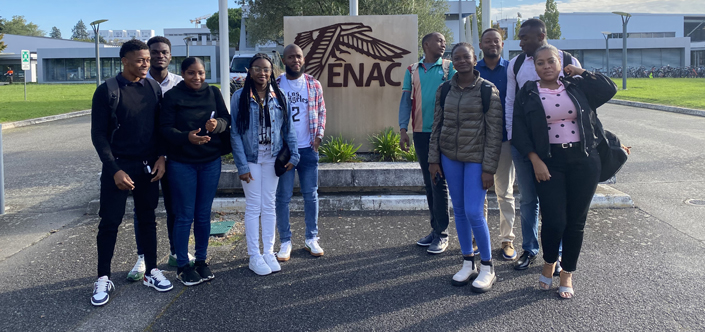
As part of the project to support the technological transition of Haiti’s air navigation, France Aviation Civile Services is assisting OFNAC in preparing for the deployment of the surveillance system in the new premises currently under construction (Port-au-Prince tower and control center to manage the Haiti FIR). However, the overall project has been on hold since November 2024, following the events that affected Port-au-Prince. Nevertheless, FRACS is continuing consolidation activities that are necessary before the new systems and working methods can be implemented. Ab initio training is included in the project and enabled ten trainees to be trained between September 2025 and March 2026. They were integrated into the ENAC GSEA 24 A class and completed a full semester of training. Half of them are destined to be in charge of aeronautical information, while the other group will become air traffic controllers at the regional control centre in Port-au-Prince.
ENAC was responsible for the educational supervision of the group of ten students, while FRACS handled the logistics and coordination with OFNAC. Due to difficulties in travel between the two countries, the trainees remained in France during the end-of-year holidays but were able to take advantage of this to discover Paris, Spain, and Portugal. During these months of training, they received academic and theoretical instruction, and half of them also received practical training in air traffic control, divided into two phases known as BASIC TWR and BASIC SURV. All students also received training in general and aeronautical English and were assessed, in particular with an MTF test to validate the ICAO level they had achieved.
On 6 March, an ad hoc committee met to deliberate on the success of the training, and nine of the trainees graduated.
Now that they have returned to Haiti, the trainees will join OFNAC and begin their careers. FRACS will continue to support them, in particular by offering remote simulation sessions for ATCO trainees to help them maintain their skills until the new surveillance tools are in place.

