FRACS Supports EASA in International Cooperation Activities
For several years, France Aviation Civile Services has been part of a consortium responding to calls for tenders (RFSC) issued by EASA on behalf of third countries. In August 2024, the framework contract was renewed and the companies participating in the consortium are now Bureau Veritas (in a leading position), ENVISA, INECO and FRACS. For each request, the consortium designates the company that will compete with the three other contracting companies. Since the start of the contract, 69 activities have been proposed and FRACS has won 3 (out of 4 proposals made).
The scope of the support requested is broad and covers various international projects in areas such as the environment, accident investigations, licences, drones and civil aviation regulations.
Depending on the scope of the expertise required, the appeal of the missions and the availability of experts during the requested periods, FRACS provides proposals. EASA’s choice is based on both the quality of the technical offer and the expertise and the price quoted. Overall, competition is fierce with the other consortia.
In recent months, FRACS has won three RFSCs. As part of the Eastern Partnership (EaP) project, two activities have been carried out:
- Workshop on EU Regulation 996/2010 on the AIG domain, conducted remotely for Ukraine, Armenia and Moldova.
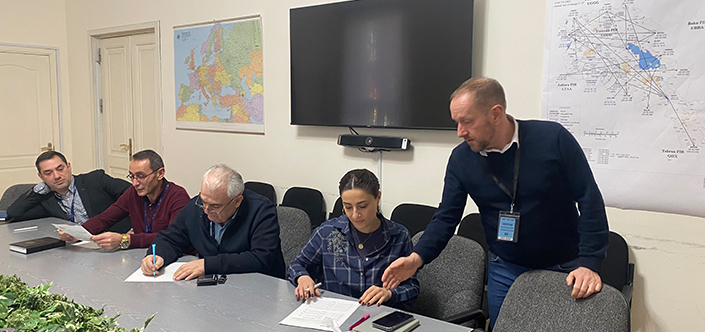
- Support for the Armenian authority (CAC) in the context of convergence with European Regulations 1178/2011 and 2015/340, with a week of on-site mentoring in Yerevan with inspectors to set up internal procedures in line with regulatory requirements.
As part of the EuroMed Transport Aviation (ETAP) project, an activity is currently underway to benefit Israel and Egypt:
- The theme is support for authorities in the certification of air traffic controller training organisations. Israel is in the process of implementing Regulation 2015/340 and is seeking support in preparing for the certification process (particularly for ATC simulators) and an exchange of best practices and models of technical guidance material. Egypt is in the preliminary phase of analysing the benefits of converging towards this same regulation, which will be presented at the workshop and will serve as the basis for defining a roadmap based on a gap analysis of the differences between the current regulation and the European one.

